giovedì, ottobre 12, 2006

STROKE TEST


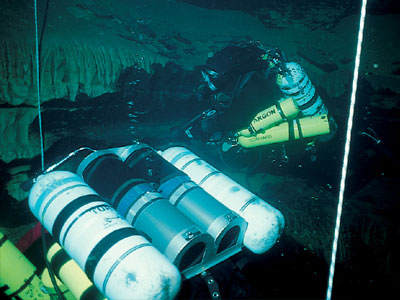
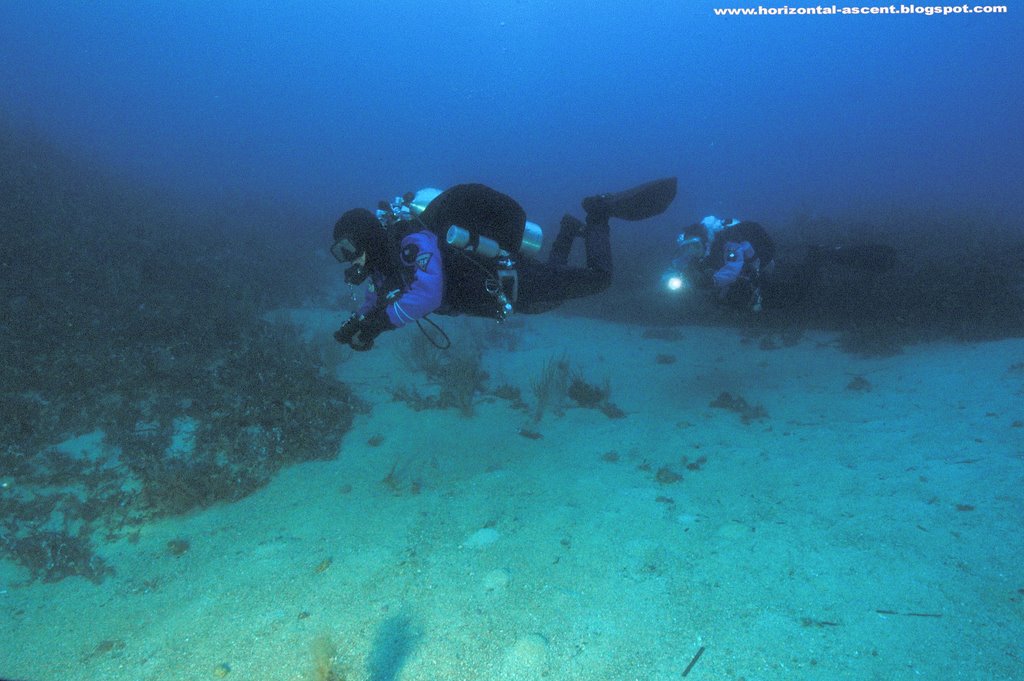
Un po' di divertimento!!! DIR o STROKE


STROKE TEST CLICCA: STROKE TEST

Fonte test: www.techdiver.ws
Foto DIW: Adam butler

mercoledì, ottobre 11, 2006

NUOVI APEKS XTX

Qusto è il nuovo modello dei secondi stadi Apeks, serie XTX. Più o meno i 50 ,100, 200 sono praticamente uguali esteticamente! Mah, non so.......


V-WEIGHT E P-WEIGHT


Due tipi di zavorra diversa oltre alla cintura. Il V-weight va inserito tra le bombole, il P-weight sulla piastra.Il V-weight arriva fino a 8kg, il P-weight 3,5kg (Più o meno)

HESER BACKUPLIGHT

Molto belle come luci di backup, Un opzione molto valida alle famose scout. Un po'più care!


Technical Description

* High light output from the 3 W LED
* Properly focused beam
* 27mm outlet diameter
* High reliability
* No electronic control
* Long Burntime
* Only 2 parts are in contact with the water --> only one sealing eghe
* The seal uses 2 O-Rings for added reliability
* Precision machined top quality
* Heat produced by the LED is returned to the batteries
* Textured, nonslip lampbody
* Simple switch mechanism
* Usable with primary and rechargeable batteries
* Size


Fonte: HESER BACKUP

DECOPLANNER


E' un software decompressivo estremamente efficace e facile, la cosa bella che esiste anche un formato per il Palmare (sistema OS).In più anche delle belle aggiunte tipo il GMP (Gas Management Program), che aiuta con i Gas, End, Mod!


Dove comprare: GUE (Global Underwater Explorers)

Foto e logo software: GUE

DIR DAY

Domenica 15 ottobre "DIR DAY" all'Argentario!


Foto: 5thd-x
Special thank's: Claudio Provenzani, Elena Romano

DISCESA LIBERA

Discesa controllata stile DIR


Fonte: Fifthdimension

martedì, ottobre 10, 2006

SUB CHE INCONTRI..........


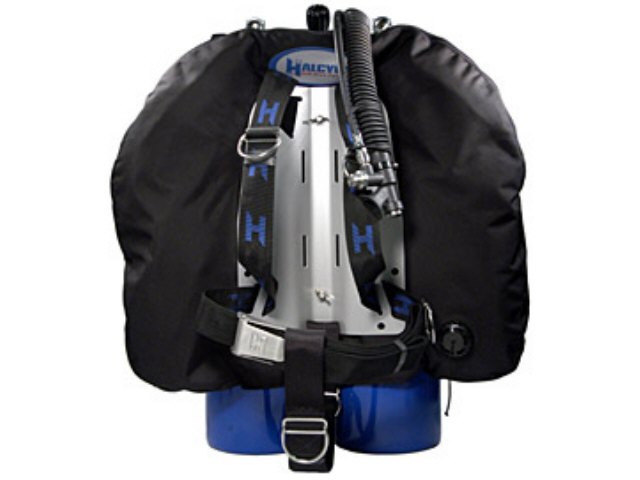
Halcyon che trovi! Però.....


Foto sopra: Adam Butler
Foto sotto: GUE (Global Underwater Explorers)

DIR FOR ALL

Un sistema per tutte le tipologie di immersioni!!! Di più nin so.......

Dal ricreativo


Al Tecnico


Al Cave


WRECK(spada laser)


Wreck(acqua blu)


team unificato


divertimento


Fino al Rebreather SCR (RB80)


Foto: FROGKICK.NL

LA SOTTILE DIFFERENZA............


Due immersioni oltre i 100 metri, una con configurazione DIR(sopra), l'altra no......


Foto sopra: GUE

Foto sotto: Adam Butler- Bigsplashpicture.com

GESTIONE NARCOSI "Doing it Wrong"

Rimango ancora tanto perplesso quando leggo nelle descrizioni di alcuni corsi dichiarazioni del tipo: "Insegniamo a gestire la narcosi d'azoto!". A mio avviso è una bufala, nel senso che non esiste un modo o un sistema per imparare a gestire questo problema, in quanto la cosa è puramente soggettiva e dipende da tanti fattori; è come dire a uno che esce da un pub ubriaco fradicio: "Guarda che esiste un sistema per guidare in sicurezza anche in queste condizioni.". L'aria a quelle profondità (61m-80m), è pericolosa non solo per la narcosi, ma anche per la PPo2 molto elevata. Sicuramente milioni di sub ogni giorno fanno questo tipo di immersioni senza alcun problema, ma altri non sono stati così fortunati.

Un modo semplice e comodo per risalire!


DIR WAY(Foto dx)!!!!!


Foto sopra: Adam Butler
Foto sotto argano: GUE
Special thank's: Fabio Casali

lunedì, ottobre 09, 2006

EJPP PROJECT (Nohoch Nah Chich/May 05)

Alcuni dei principali tunnel del sistema Nohoch Nah Chich,nuotando in mezzo ai cristalli. Made in Italy!


Photo Sharing - Upload Video - Video Sharing - Share Photos


Fonte: EJPP
Copyright video: Alberto Nava
Team Members: Alberto Nava,Franco Attolini,Luca Maghelli,Gianmario Rocca,Alex Alvarez,Nick Toussaint

DIR BASIC SKILLS

Come promesso......


Photo Sharing - Upload Video - Video Sharing - Share Photos


Fonte: Fiftdimension

DIR 3 VIDEO

Il video poco conosciuto di GEORGE IRVINE.......Ahhh, i bei tempi


OOA (Gas sharing)


OOA (out of air) con frusta lunga DIR SKILL

Fonte: Fifthdimension

domenica, ottobre 08, 2006

EKPP (European Karst Plain Project)

Anche noi Europei spingiamo forte!: 5880 Metri (19291 Feet)


An email from the EKPP team leaders:

The EKPP (European Karst Plain Project) pushed the Doux de Coly on August, 22 to 5675 mtr (18618 ft) distance to air.

The dive started in the morning of August,22 at 7:03 am and lasted 18 hours 21 minutes. The divers Michael Waldbrenner and Reinhard Buchaly surfaced in the morning of August, 23 at 1:24 am. 675 meters of line were added and surveyed from their 5000 mtr endpoint of the last year.

Both divers used a double RB80 rebreather configuraton with 2x 20 liter backmounted bailout cylinders (trimix 16/80). Three drive stages were used with 2x trimix 22/70 and 1x 16/80 and five magnum Gavin scooters per
diver. All rebreathers were fitted with a custom counterlung optimized for the depth of the cave. Lighting was with a 18 Watt HID with a custom made reflector powered by 20 Ah Nicads.


The dive started with a visibility of 15 to 20 meters ( 50-65 ft). Due to heavy rainfalls two days ago the vis reduced after approx. 1000 m (3300 ft) distance to initally 4 meters (13 ft) , then 2 meters ( 6 ft) visibility.
Luckily the vis improved again after 2300 meters (7500 ft) to the starting vis.

Again at 4500 mtr (14700 ft) the vis went down, but it improved after further 200 meters. When reaching the endpoint of the last year at 5000 meters (16400 ft) it was expected that the cave would continue the downslope. But it stayed at a level between 65 and 60 meters (213 - 197 ft). The cave got smaller at 5300 meters (17400 ft) where the tunnel ended in a T. Choosing the way to the right, the now smaller and silty tunnel went in eastern direction til
the line was tied off at 5675 mtr.

Bottom time was around 8 hours. The decompression took place in the shaft 300 meters from the entrance. Total deco time was about 9 hours 15 minutes. Additional time was spent travelling the shallow part and entering and
exiting the habitat for the last three hours of deco. Water temp is around 12,5° C.
Both divers felt well after the dive, and after a good sleep jogging the next morning showed no lung problems.
A more detailed description of the dive and the team effort will be placed on a website in a few weeks.

We want to thank our great DIR support team for their excellent work.

We had a lot of fun within the team and enjoyed the dives.

Reinhard Buchaly and Michael Waldbrenner

Fonte articolo: Innerrealm.co.nz
Foto: EKPP

sabato, ottobre 07, 2006

TRIM E ASSETTO


Good trim is a hallmark of DIR diving. Avoid finning techniques that direct propulsion downward, and thus propel your body at an inclined angle through the water. Divers who fin in this manner will notice that when they stop kicking, they have to add gas to their BC to keep from sinking. When they begin kicking again, they will then need to dump air to keep from becoming positively buoyant. Instead, develop good finning techniques to keep your body horizontal in the water column.


DIR Tips: courtesy of Global Underwater Explorers
FOTO: EJPP

DB VALVEDRILL (chiusura rubinetti)

Quando i rubinetti perdono!


Fonte:Fifthdimension

DECO


Bubble Formation and Elimination
by George Irvine

Gas does not transfer from tissues into arteries or veins, it does so into capillaries. The arteries coming from the heart are huge, thick, elastic, pulsing conduits that get smaller as they branch out until they become capillaries, and then the return to the heart is through veins which are also thick and get larger as they combine to return blood to the right side of the heart.

That blood is then sent to the lungs, where the massive network of tiny capillary beds located in about 45,000 square feet of surface area, act as a "filter" for bubbles. The "filtered" and now oxygenated blood which has passed its co2 and other excess gasses to the lung space, goes back to the heart to be pumper through the system again. The whole trip takes about two minutes to happen.

You do not bubble into the arteries. If bubbles get into the arteries it is because they passed the filter or were "shunted" over through a PFO in the arterial walls, or because they were momentarily compressed enough momentarily to get past the lungs and then re-expanded as the pressure dropped prior to reaching the capillaries, in which case they lodge in the smaller and smaller vessels and block them. This occurs in bounce diving, as in doing a dive and then bouncing back down to retrieve something, like a deco bottle. This is why we do not allow bouncing in the WKPP, and why we require our support divers to stay out for 4 hours before diving shallow for support.


Most people get the greatest rush of bubbles from the tissues into the blood stream upon surfacing from 20 feet or so. This is why we do that differently, (information to follow.) Most people tend to bubble for hours after a dive. Most bubbles tend to grow from the surrounding supply of gas before they get smaller and disappear.

If the bubbles are in the tissues, you have pain. The way to prevent bubbles in the tissues is to properly decompress starting deep and at a rate that allows the bubbles to escape to the blood stream. Deep this needs to be done carefully and in solution, shallow you can press the gradient and allow offgassing in bubble form into the blood stream. The difference is that if you screw up shallow, you can go back a little and fix it. If it occurs deep, that makes it impractical and a huge waste of time for nothing. For people wight cardiac or pulmonary shunts, offgassing in bubble form is super dangerous. For those without, it is far more efficient. For those with PFO's, the risk is greatest AFTER they get out of the water for the reasons stated above (growth of bubbles and continuation of bubble offgassing.)

I think you can see where I am going to tell you that you need to do your shallowest dives first, do your drills before yo do your dives, and why you can basically ignore repetitive dives using the correct deco. You can NOT ignore them with respect to oxygen exposure.

Tratto da:© 1998-2006 GUE.COM
Foto:Waldbrenner.de
Diver foto:David Rhea

venerdì, ottobre 06, 2006

THE ROBERT GASKIN (new line)

No,non si riprendono più!!!

UFO's (Unidentified "Floating" Objects)


Altrimenti come li definireste voi questi......


Foto: deepblueutila.com

NON VEDO,NON SENTO,NON PARLO "MA ESPLORO"


Qui tre belle configurazioni DIR (pinne sulla sinistra a parte) modello CAVE!

Foto:masa.net

DIR BOOKS & DVD

Questi sono i libri e i dvd per il DIR neofita e non!

DOING IT RIGHT:By Jarrod Jablonski - Published 2002 - This book outlines not only the essential skills and techniques constituting sound diving practice but also the central elements of a holistic approach to diving. The Fundamentals of Better Diving was written for anyone who wants to get the most out of their diving. Highly Recommended !!!(also in spanish)

Dress for success:By Dan MacKay. The full color manual discusses DIR philosophy, equipment selection, fitting and rigging in a logical step by step manner. It is a great companion to "DIR: The Fundamentals of better Diving".


Fitness For Divers:
Fitness for Divers is the only fitness book written specifically for divers. Diver and fitness professional Cameron Martz combines the latest information about exercise and diving physiology in one book.


DIR 2004 DVD
The most comprehensive overview of the Doing It Right system ever available on DVD. Includes 3 DVDs.


The Mysterious Malady DVD
The Mysterious Malady: Toward an Understanding of Decompression Injuries DVD is the first in a series of DVD's presented by GUE designed to expand one's knowledge of decompression and its associated maladies.


PANTELLERIA 2005
GUE divers assembled in Pantelleria, Italy in May 2005 for Archaeological Survey of ancient Amphorae. The recovered Amphorae, from depths in excess of 80 meters, is thought to be roughly 2,500 years old. Witness the GUE exploration efforts and details of the documentation of this historic dive site on the Pantelleria 2005 DVD, produced by GUE. English & Italian languages support this beautifully directed DVD with 15 minutes of dive footage, including bonus materials and a supplemental photo gallery.

I LIBRI E I DVD SI POSSONO ACQUISTARE SUL SITO: GUE(Global Underwater Explorers)

giovedì, ottobre 05, 2006

TEST DI TENUTA MUTA STAGNA


Prendere la muta,chiudere la cerniera completamente,prendere due bottiglie di plastica(Tipo ferrarelle) e nastrarle con scotch carta ai polsini. Dopodichè prendere una latta(grande, tipo pelati), fare un buco di dimensioni di una frusta e nastrare al collo. Poi prendere la bombola, montare un primo stradio con una frusta senza il secondo stadio e infilarla dentro al buco della latta(so che suona hard) e gonfiare la muta.
A questo punto,o con una spugna insaponata o con uno spruzzino pieno d'acqua e sapone,cominciate a spruzzare sulla muta la saponata, e lì dove appaiono microbollicine d'aria(non vi preoccupate, non è una EGA della muta) ci sono i forellini che vi fanno uscire zuppi dall'immersioni! Ora prendete un gessetto bianco e segnate il punto esatto,quindi aquasurate.Et voilà, les jeux sont fait.
P.S Il test si puo' fare anche in negativo(muta rovesciata) chiudendo la zip dal collo, perche' a volte i fori sono sotto ad un doppio strato, come un overlay.
FOTO SOPRA: DUI

I TRE "MOSCHETTONI"


Un fissaggio per ogni esigenza


Halcyon offre moschettoni di alta qualità nei formati con occhiello da 0,95cm, 1,25cm, 1,6cm, 2cm, 2,5cm e 3cm . I nostri "doppia luce" sono disponibili nelle misure 9,5cm e 11cm. I D-Ring da 5cm sono disponibili standard e "accorciati", insieme con i fissaggi per D-Ring. I moschettoni in acciaio inox Halcyon non devono essere confusi con i moschettoni in ottone cromato che si trovano sul mercato. LA funzionalità costante e senza intoppi li rende ideali per ogni esigenza di immersione. Non affidate la vostra vita ad attrezzatura che potrebbe ossidarsi, bloccarsi o corrodersi. Usate i moschettoni e fissaggi Halcyon.
FONTE: HALCYON

NO SUICIDE CLIPS!!!